Sales Enablement Best Practices for B2B SaaS
Your reps are back to building their own decks, and nobody can explain why quota attainment hasn't moved since the last "enablement launch." This happens because most B2B SaaS teams treat sales enablement like a one-time event instead of an ongoing process tied to the CRM and the sales team's actual behavior. By the end of this article, you'll know what separates enablement programs that hold up over time from the ones that quietly decay after the first quarter.
In this article, you will find:
What the data says about teams that actively track enablement outcomes
Why one-time launches decay and what to build instead
How to tie enablement content to actual CRM stages
Why coaching is the multiplier most programs skip
How to keep an enablement program alive past quarter one
Sales Enablement & Process: What the Data Shows
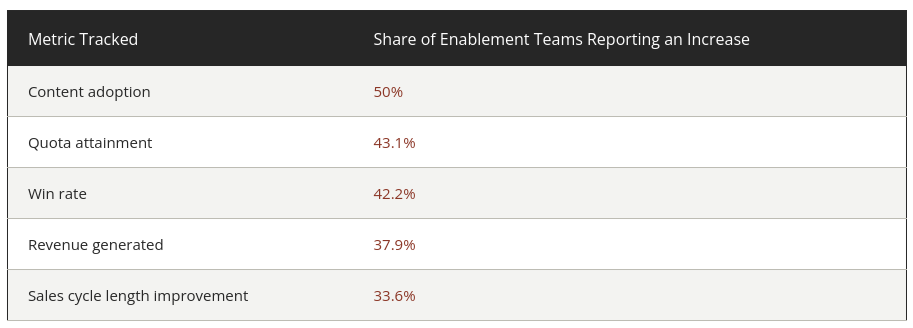
The pattern here is hard to miss. Among teams that actually measure their enablement programs, a plurality see movement on the metrics that matter most: quota attainment and win rate. That measurement piece is not incidental. Teams that cannot say whether their program is working are, by definition, not going to show up in a report like this one.
Why One-Time Enablement Doesn't Hold
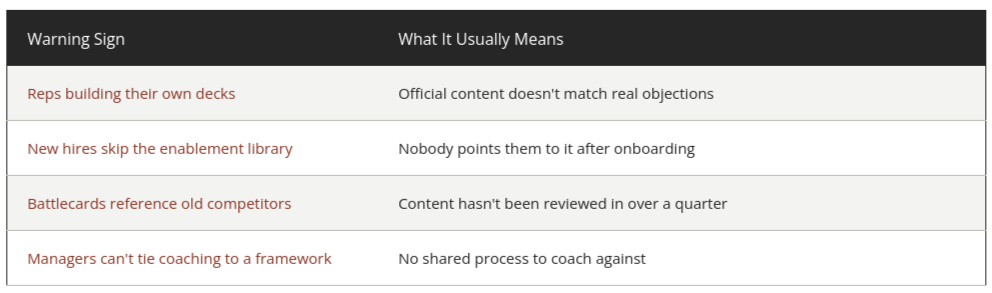
A kickoff deck feels productive in the moment. It also has a shelf life measured in weeks. New hires never see it, the market shifts, and the messaging top reps actually use on calls quietly diverges from whatever is sitting in the shared drive.
This is the core reason Sales Enablement & Process needs to be framed as a process rather than a project. A program built once and left alone decays the same way any unmaintained system does.
Tie Enablement Content to Real CRM Stages
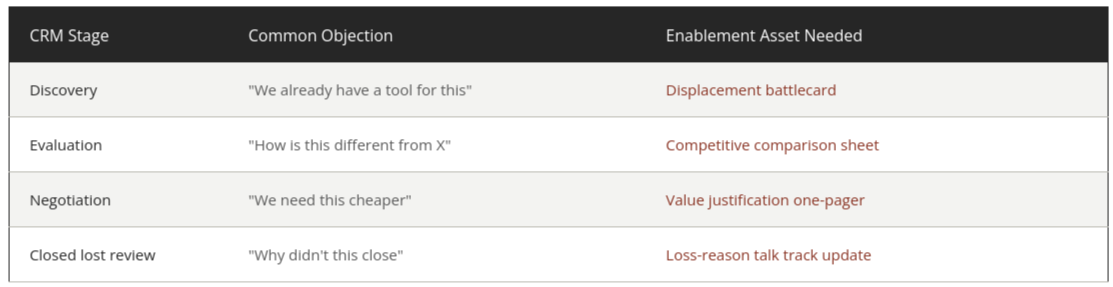
Most enablement programs start backward. Someone decides the team needs a new pitch deck or a competitor battlecard, and that becomes the whole initiative, regardless of whether it maps to where deals actually stall.
The fix is mapping every asset to a specific CRM stage and the specific objection a rep hears there. If a piece of content doesn't have a clear "use this when" trigger tied to pipeline data, it doesn't belong in the library.
Coaching Is the Multiplier Most Programs Skip
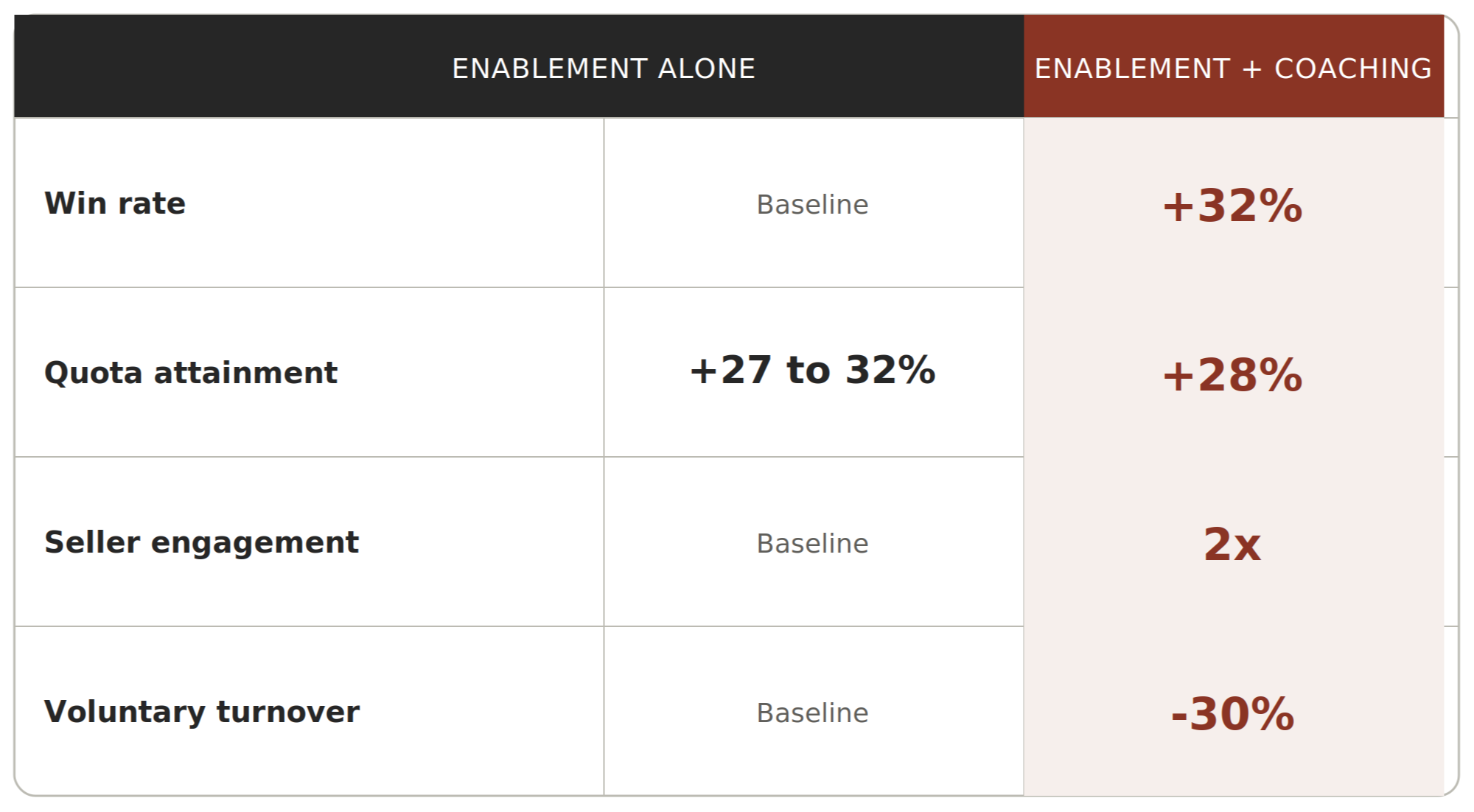
A monthly enablement newsletter is not coaching. Real coaching is specific, tied to a rep's live pipeline, and repeated often enough that behavior actually changes.
Teams that treat enablement as a measured, ongoing process, rather than a one-time content push, are the same teams showing up with quota attainment and win rate gains in the data above. Coaching is what turns content into behavior change, and impact measurement is what tells you whether that change is actually happening. Enablement without either gets partial credit at best.
Frequently Asked Questions
What is sales enablement and process in B2B SaaS? Sales enablement and process is the ongoing system of content, CRM data, and coaching that keeps reps effective at each stage of the deal cycle, rather than a one-time training event.
How much does sales enablement improve quota attainment? Among enablement teams that actively track outcomes, 43.1 percent report an increase in quota attainment, according to the 2025 Sales Enablement Landscape Report, with similar gains reported in win rate and revenue generated.
Does measuring enablement impact actually matter? Yes. Teams that cannot measure whether their program is working tend not to show up in the data on improved outcomes at all. Measurement is what turns a content library into a program you can actually improve over time.
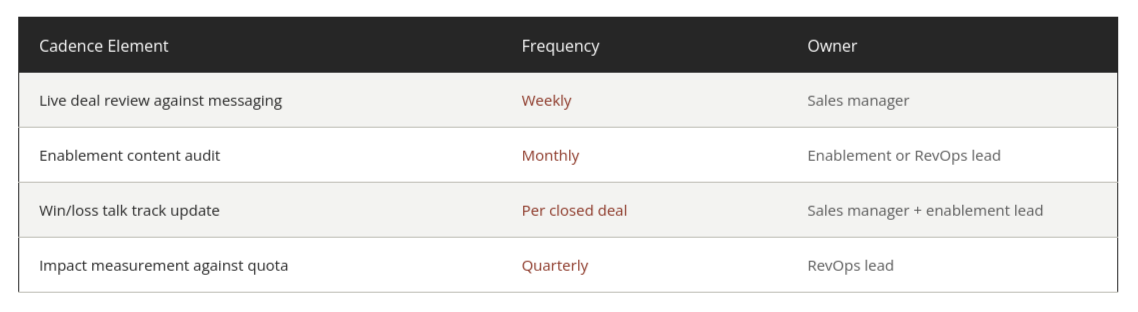
Who should own sales enablement at a growing SaaS company? Ownership varies by company size, but the strongest programs have a dedicated owner, whether a RevOps lead, an enablement manager, or a fractional resource, with direct access to CRM data and a standing coaching cadence with sales managers.
How often should enablement content be updated? Core assets should be audited monthly, with specific talk tracks or battlecards updated within days of a loss review or win-loss analysis surfacing something new.
Conclusion
Sales enablement and process only works when it's treated as a living system tied to your CRM and your coaching cadence, not a deck you ship once and forget. The data makes the stakes clear: teams that measure their enablement programs are the ones seeing real movement in quota attainment, win rate, and revenue. If your program hasn't been touched since launch, that's the first thing worth fixing.
Curious what a structured look at your RevOps and enablement setup actually involves? Read what happens during a RevOps consultation and why the format matters
Sources: Sales Enablement Collective. "Sales Enablement Salary & Landscape Report 2025." https://www.salesenablementcollective.com/sales-enablement-salary-and-landscape-report/